Manchester Band Prints and Indie Music Posters
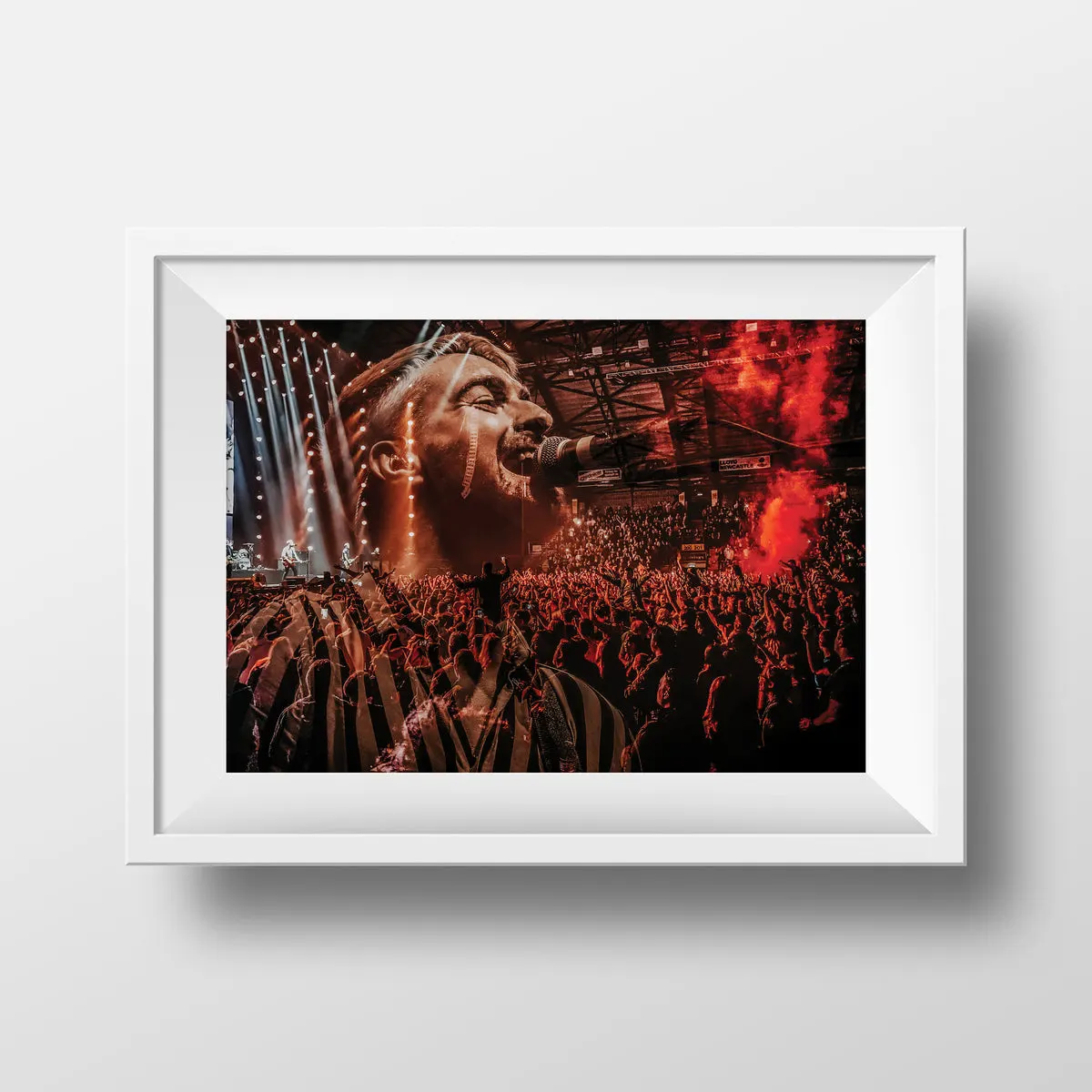
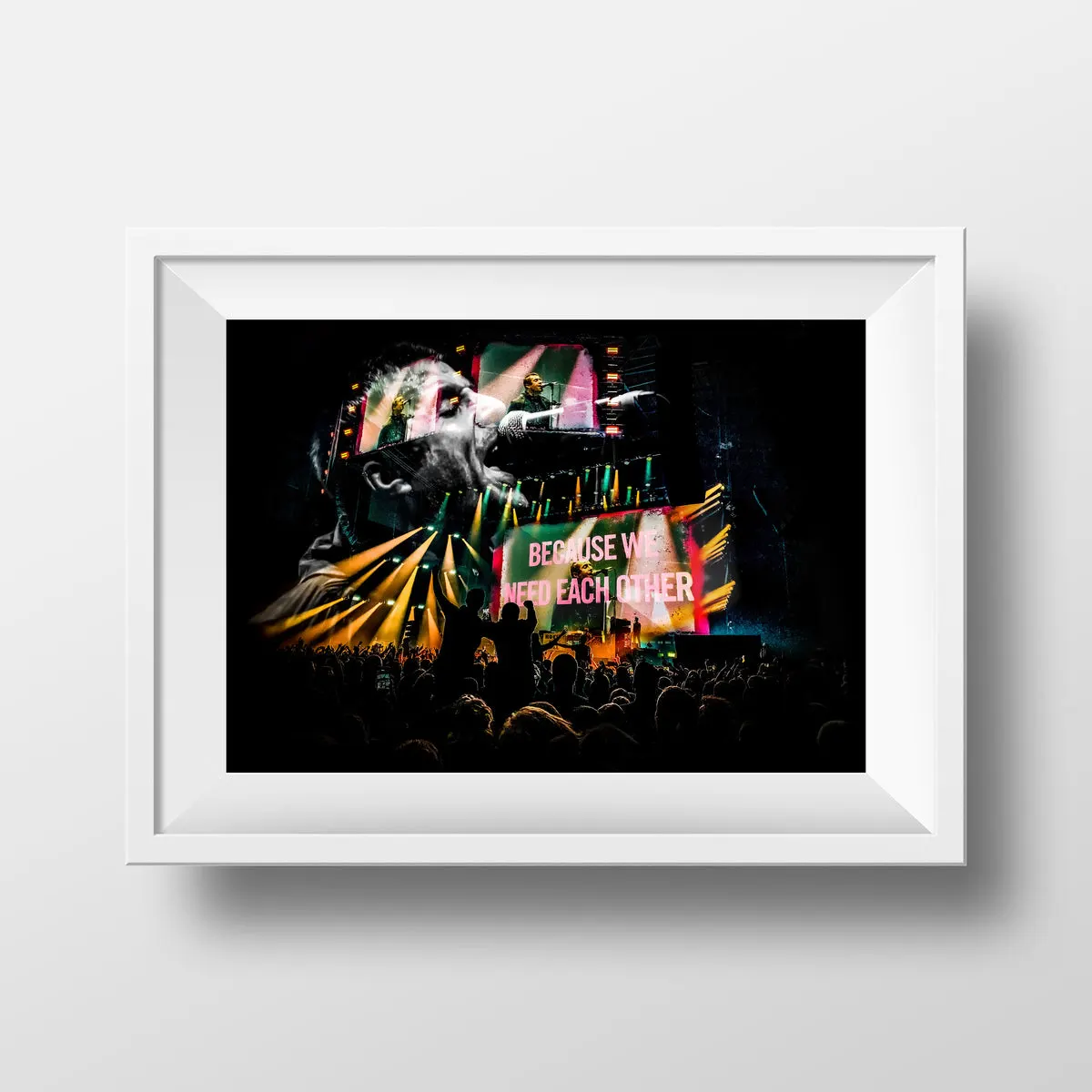
Band prints from the Manchester and British indie scene come in a handful of standard sizes, and the size you pick matters more than the subject. A3 (297 x 420 mm) suits most walls and fits a ready-made frame. A4 works on a shelf or a narrow hallway. A2 and larger only make sense on a clear wall with real space around it.
Prices vary widely. Mass-produced posters start at around £5 to £10, while signed or numbered limited editions can run from £40 to several hundred pounds. Treat those figures as rough guides, not fixed quotes.
Types of Manchester band prints
Not every print is made the same way, and the difference shows after a year on the wall.
- Offset posters: cheap, thin paper, fine for a bedroom or a rented flat.
- Giclée prints: pigment inks on heavy cotton or fine art paper, usually 200 to 310 gsm, with better colour depth and slower fading.
- Screen prints: hand-pulled in layers, often in editions of 50 to 300, and the most collectable of the lot.
- Gig posters: made for a specific show, so the date and venue are part of the appeal.
Illustrated portraits are the biggest category. Artists draw the likes of Oasis, The Stone Roses, Joy Division and The Smiths in styles from pop art to stark black and white. One example is the Liam Gallagher print by Ricky Atterby, titled 'We Need Each Other', which shows how a single-figure portrait can carry a whole era.
Which bands and artwork people look for
Some designs are close to universal. The unmistakable Joy Division Unknown Pleasures pulsar lines, the Stone Roses lemon and Jackson Pollock splashes, the Smiths sleeve portraits and the Oasis Knebworth crowd shots all show up again and again. They are popular because the artwork already did the work in the record shop.
If you want a starting point for one band, browse The Stone Roses collection and compare how different artists treat the same imagery. Paint splatter, lemon motifs and the Spike Island era each get very different handling.
How to choose a print that lasts
Check the paper weight first. Anything under 150 gsm will ripple and crease. Aim for 170 gsm or more for a poster, and 250 gsm or more for a proper art print.
Look at the finish too. Matte hides fingerprints and glare, which helps in a bright room. Gloss makes bold colour pop but reflects light badly behind glass.
Direct sunlight is the main enemy. Even decent inks start to fade within a couple of years if the print faces a south-facing window. UV-filtering acrylic or glass costs a little more, though it is worth it for anything you paid real money for.
Framing basics
Standard frames in A4, A3 and 50 x 70 cm are easy to find and usually cost between £10 and £30. Use a mount (a card border) with a limited edition, because it keeps the paper from touching the glass. Odd sizes mean custom framing, which can easily double the cost of the print.
Spotting a good edition
A numbered edition should show something like 45/200 in pencil near the bottom edge. An artist signature adds value. Be wary of "limited" prints with no edition size given.
Prints versus other music merchandise
A print is a wall piece, while small items serve a different purpose. If you want something to carry daily, Keyrings and magnets cover the smaller end, and they pair well with a framed print of the same band. For a wider look across the scene, the Entire music store catalogue gives the full spread of subjects, from Beatles to Sex Pistols to Courteeners.
Posters of the same band sometimes appear in several versions. Check the artist credit, the paper and the edition details before assuming two are alike.
Frequently Asked Questions
What size is best for a band print?
A3 is the safest choice for most rooms. It is large enough to read from across the room and fits widely available frames. Go to A2 only if you have a big, empty wall.
Is a poster the same as an art print?
No. Posters are usually offset printed on thin paper in large runs. Art prints use heavier stock and better inks, and are often made in small numbered editions.
How do I stop a print from fading?
Keep it out of direct sunlight and away from damp walls. UV-filtering glass or acrylic slows fading a lot. Pigment-ink giclée prints also last longer than cheap offset copies.
Do I need to frame a limited edition print?
Yes, ideally with a mount and a backing board. Unframed paper creases, yellows and collects dust. A basic frame at around £15 to £25 is enough protection for most prints.