Empty Keyrings and Band Keyrings: A Practical Guide
What "empty keyrings" actually means
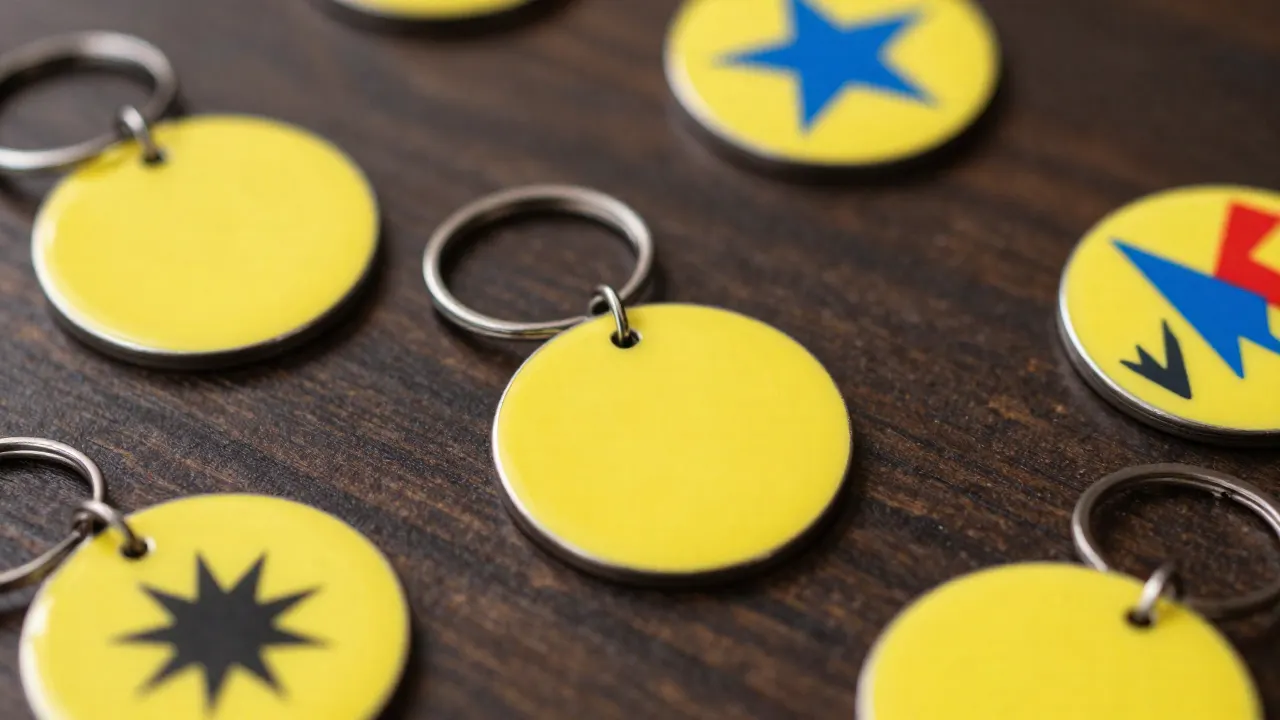
Search for empty keyrings and you will find two different things. One is a plain split ring or a blank keyring base with nothing attached. The other is a keyring blank with a space for your own artwork, photo or band logo.
Both are cheap and simple. A standard split ring is about 25mm across, and a blank acrylic or metal base usually measures between 30mm and 50mm. Prices for blanks start at around 20p to 50p each when bought in bulk.
Band fans tend to want the second kind. A blank is the starting point, and the finished design is what makes it a keepsake. Whether you are making one yourself or choosing a ready-made piece, a few details decide how long it lasts.
Types of empty keyrings and blanks
Know the format before you pick a design. Artwork prepared for one shape rarely fits another.
- Acrylic blanks, clear and about 3mm thick, hold a printed insert behind the plastic.
- Metal bezel blanks have a shallow tray, often 25mm round, for a resin dome or a paper circle.
- Rubber and PVC bases are soft, bend without cracking and suit larger logos.
- Plain split rings with a short chain are the bare minimum, good for adding your own charm.
Acrylic is the easiest for beginners. Metal looks sharper but takes more care with glue and sealing.
Sizes that suit band artwork
Album covers are square, so a 40mm square or a 35mm round blank crops them cleanly. Wide logos, such as a tall band wordmark, sit better on a rectangle around 50mm by 25mm. Print at 300dpi for a sharp result at that size.
Band keyrings from Manchester and British indie
Ready-made band keyrings are a big part of music merchandise. Manchester acts dominate: the Joy Division "Unknown Pleasures" waveform, the Stone Roses lemon and splash artwork, and Smiths portraits all shrink well onto a small face.
Oasis designs are especially common, from the Union Jack guitar to the Definitely Maybe room scene. If you want to see what exists beyond keyrings, the Oasis merchandise collection gives a sense of how the band's artwork is used across formats.
Fridge magnets follow the same logic as keyrings. They use the same artwork at similar sizes, usually 50mm to 75mm, with a flexible magnetic backing.
Choosing a good empty keyring or finished piece
Look at the fixing first. A weak ring or thin chain is what fails, long before the print fades. Steel rings with a chain of at least 2mm links hold up to daily pocket use.
Check the finish too. A domed resin coating protects the print from scratching. A flat paper insert under thin plastic will scuff within a few months of rattling against house keys.
My advice: pay slightly more for a solid metal fitting and skip the ultra-thin acrylic. A keyring that lasts three years beats five that snap.
Making your own band keyring
You need a blank, an insert cut to size, a little clear glue and a sealing layer. Cut the insert with a circle punch for neat edges. Seal it with a thin coat of gloss varnish or a resin dome and leave it to cure for about 24 hours.
Use artwork you have the right to reproduce. Official band images are protected, so home projects are best kept to personal use, or to your own photos and original designs inspired by a gig or a place.
Where keyrings fit in music collecting
Small items are the easy entry point into collecting. A keyring costs a few pounds, takes no wall space and travels with you. Many fans then move on to Music prints and posters for the larger artwork, or browse the Entire music store catalogue to see how band merchandise spreads across t-shirts, prints and accessories.
Gig venues in Manchester, including the Apollo and the Albert Hall, have long had merchandise stalls where keyrings sit alongside tour shirts. Prices at stalls tend to run from around £3 to £8, depending on the act.
Frequently Asked Questions
What are empty keyrings used for?
They are blank bases that you fill with your own image, photo or logo. Crafters, school groups and small event organisers use them most. Fans also use them to make one-off band pieces.
What size should my artwork be?
Match the artwork to the blank, not the other way round. For a 25mm round bezel, cut a 25mm circle, or slightly smaller if the tray has a lip. Print at 300dpi so the detail stays crisp.
Are acrylic or metal blanks better?
Acrylic is cheaper and more forgiving for first attempts. Metal looks more polished and tends to last longer, but the sealing step needs more care.
How long do homemade keyrings last?
With a sealed print and a steel ring, expect two to three years of regular use. Unsealed paper inserts can wear in a few months.